When Does Brickwork Need Repointing?
How to tell whether the mortar has actually gone, what happens if it's left, and what this covers. This guide is about walls, patios and chimney stacks. Lime mortar and heritage repointing on listed or period buildings sit outside our work and are not covered here.
Judge the joints, not the age of the wall
Brickwork needs repointing when the mortar joints have worn back, gone soft or started to disappear, not when a wall reaches a particular age. A wall built forty years ago with joints still hard and sitting flush needs nothing doing to it. A wall built fifteen years ago in an exposed spot can already be ready. What matters is the state of the mortar in front of you, not the date it went up.
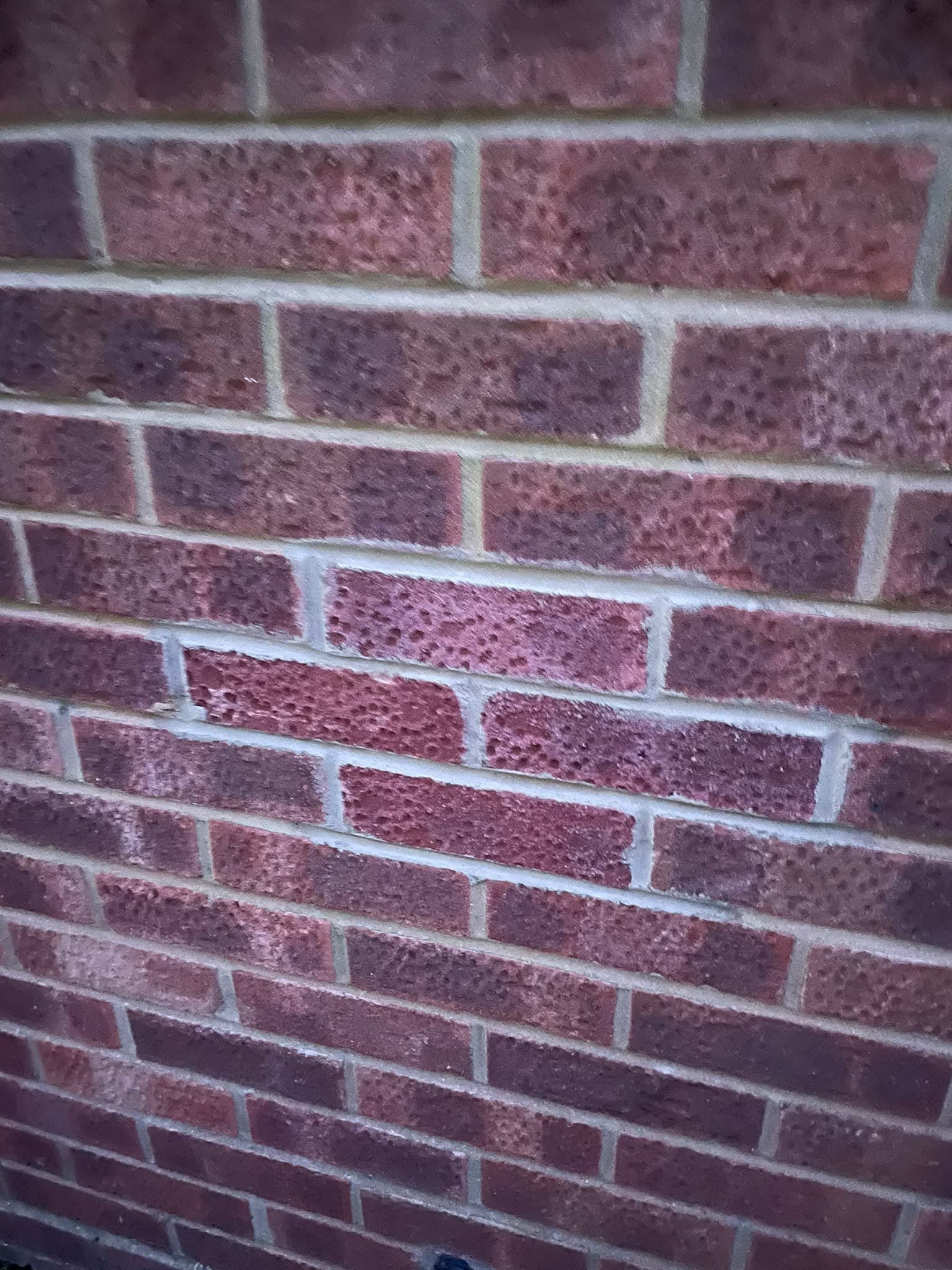
Mortar is built to give way before the brick does. It sits slightly softer than the brick either side of it, so the weather works on the joint and leaves the brick alone. That is the joint doing its job. The trouble starts once there is not enough of it left to do that job. Once a joint has eroded back behind the face of the brick, or gone soft enough to rake out with a fingernail, rain stops running off the wall and starts sitting in it.
That is why the honest answer to 'when' is: before a winter rather than after one. Water sitting in an open joint freezes, and frost is what turns a tired joint into a damaged wall. It lifts the face clean off the brick. Once a brick face has blown like that, repointing on its own will not put it back. The brick has to be cut out and replaced with a matching one, which is a bigger job than a patch of pointing.
Just as often, the answer is that nothing needs doing yet. A few hairline gaps, some staining, a patch of green on a north-facing wall. None of that on its own means the pointing has failed. We would rather walk a wall and say it can wait a couple of years than start a job it doesn't need. It is also normal for one elevation to need attention while the other three are fine. Weather does not hit a house evenly: a gable end, a chimney stack and the low courses near ground level tend to go first.
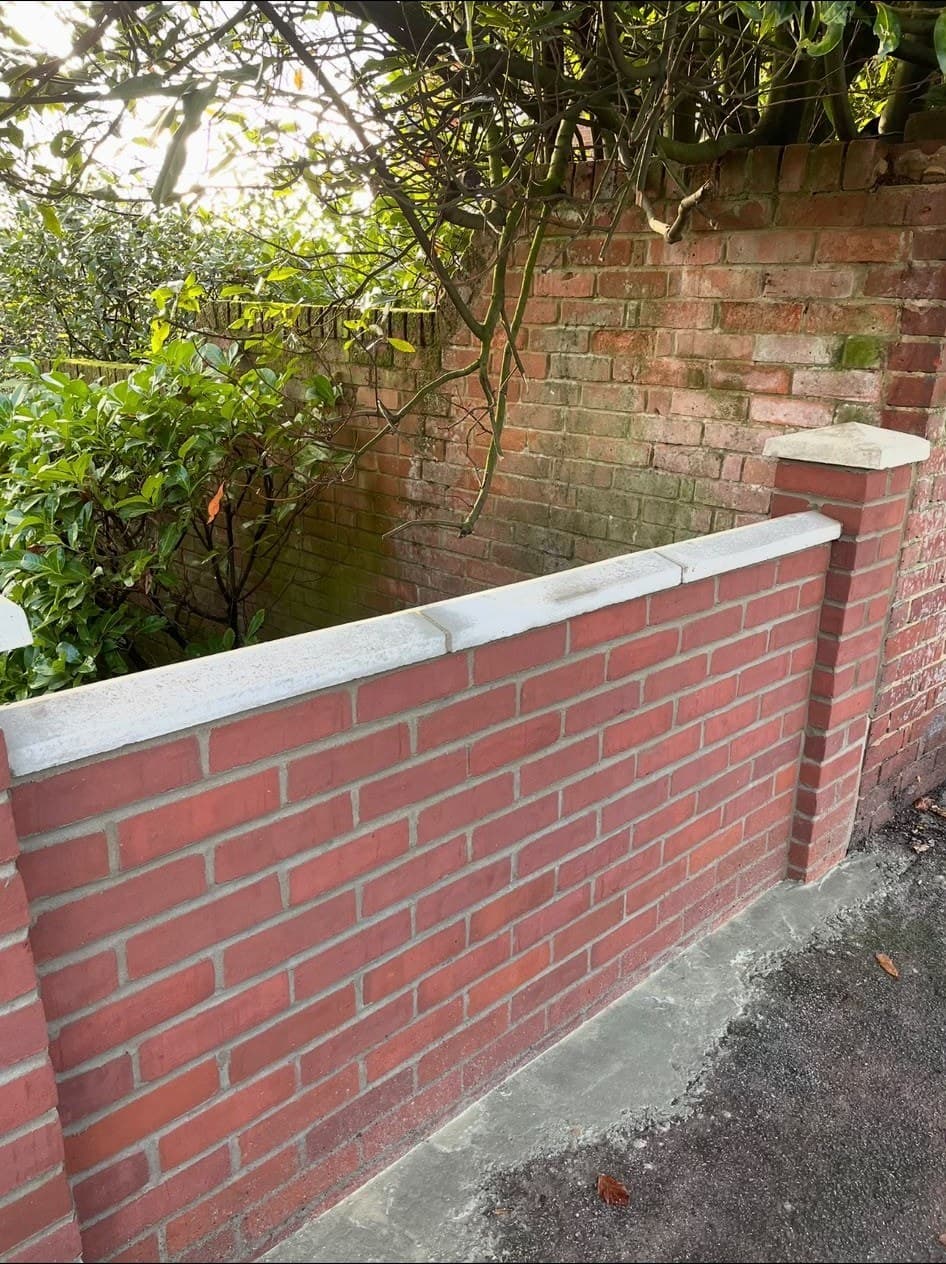
That leads to the question most homeowners actually arrive with: does the whole house have to be done at once? Usually not. Repointing is carried out where it is needed, and matching new mortar to old across a patch is a normal part of the job, not a compromise on it. Tackling one elevation at a time, worst first, is a sensible way to handle a house. What we would not do is point over mortar that has already failed underneath, which can look fine for a couple of years before it falls away in sheets.
Scope matters too. Lime mortar and heritage repointing on a listed or period property is a specialism in its own right, and it is not work we take on. If that is what your house needs, you want a specialist who does it every day rather than someone learning it on your wall. Everything else on this page, from a patch of pointing on a garden wall to a full patio, is work we carry out regularly across Dorset and into Hampshire.
Timing
The winter matters more than the month
There is no time of year when brickwork cannot be repointed, but leaving an open joint through a winter is what turns a mortar job into a brick job. Spot it in autumn and it is worth dealing with that year rather than waiting. Spot it in spring and there is a full summer to get to it, worst elevation first if the whole wall does not need doing. Jack visits every job in person before it is priced, so the timing on your wall gets judged on what is actually there, not on a general rule.
- We will usually be out to look at the job within the week of getting in touch
- A written quote follows, with no obligation attached to it
- Worst elevation first is fine. Repointing does not have to mean every wall at once
Six things to look for before you decide
Walk round the wall on a dry day. It settles most of the question.
Mortar comes away easily
Push the point of a screwdriver into a joint without leaning on it. Sound mortar barely marks. If it crumbles out, or scrapes away into a hole, that joint has gone.
Joints sit back behind the brick
Sight along the wall from the side rather than straight on. Where the mortar has eroded back and left the brick edges standing proud, the wall is holding water instead of shedding it.
Damp appears on an inside wall
A patch that shows up after rain and dries slowly, on a wall with weather on the other side. Rule out the gutter and downpipe first, then look hard at the pointing above it.
Brick faces have flaked or blown
That is spalling, and it leaves a rough, lighter patch where the face used to be. It is past the point repointing alone will fix, and a reason to act on the joints nearby before more go the same way.
Green growth and crumbs at the base
Moss and algae mean part of the wall is staying wet. Sand and grit collecting along the bottom is the joints arriving on the ground a little at a time.
Cracks that follow the joints
A crack running along the mortar line usually means repointing and repair work. One that runs straight through the bricks, or a section that has bowed out of line, is a bigger conversation.
Cost
What decides the price
Priced after we have seen the wall
Every repointing job is different, so we do not publish a figure that would not survive contact with your wall. What decides the price is how much wall there is, how high it is, how far the old mortar has gone, and how much of it has to come out before new mortar goes in.
- A free, written quotation with no obligation attached to it
- Priced on how long the job will actually take, agreed with you before work starts
- Mortar matched to your wall for colour and joint finish before anything is filled
- Backed by a five-year workmanship guarantee
We are not the cheapest bricklaying team in Dorset, and we will not pretend otherwise. What you are paying for is the old joint raked out properly before anything new goes in, and that is the part you only notice the value of a few winters later.
What people ask us next
The questions that come after "is it ready".
How often does brickwork need repointing?
There is no interval we could give you that would be honest. It depends on the mortar that went in, how exposed the wall is, and which way it faces, so on one house the four elevations often are not ready at the same time as each other. Judge the joints rather than the years. If they are hard and sitting flush with the brick, leave them alone.
Does the whole house have to be repointed at once?
No. Repointing is carried out where it is needed, and doing one elevation at a time, worst first, is a normal way to handle a house. It spreads the work and means you are not paying to redo joints that are still sound.
Is it better to get it done before winter?
If the joints are already open, yes. The work itself can be done in the cold. The risk is an open joint left through a winter, which is the one that comes out the other side with a brick face blown off it, and replacing brick is a bigger job than replacing mortar. Spotted it in autumn? That is the year to deal with it.
What actually happens if it is left?
The joint keeps opening and the wall keeps holding water instead of shedding it. The step that does the damage is frost. Once a brick face has come off, repointing alone will not put it back, and that brick has to be cut out and a matching one built in. A patch of pointing is a smaller job than a patch of pointing plus brick replacement.
Do patios need repointing as well as walls?
They do, and it is usually the one people notice last. The joints between the slabs or bricks work loose, weeds get into them, and water gets underneath. Patio and path repointing is measured differently to a wall and has a page of its own.
Ready to get yours looked at?
Whichever of these your wall turns out to need, it starts the same way: we come and see it, and you get a written quote for it.
 01
01Brickwork Repointing
Joints raked out to a proper depth and refilled with mortar matched to the wall for colour and finish. Carried out where it is needed, not automatically across all four sides.
Learn more 02
02Patio and Path Repointing
For joints that have worked loose, filled with weeds or started letting water underneath the paving. Measured differently to a wall.
Learn more 03
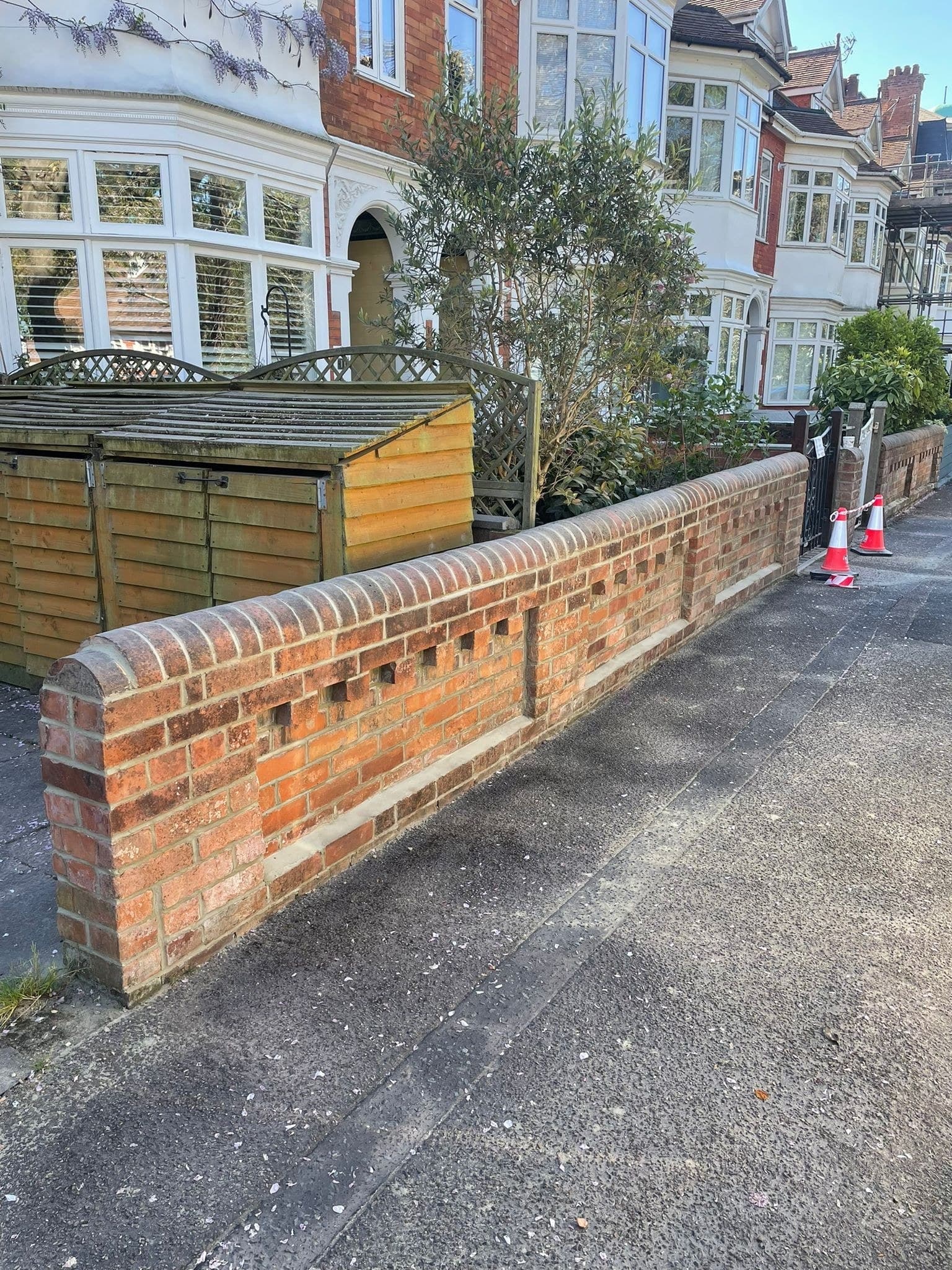
03Brickwork Repairs
For where the pointing is no longer the only problem. Blown brick faces cut out and replaced, cracked sections repaired, and any moved brickwork rebuilt into what is sound either side of it.
Learn more 04
04Brick Matching and Restoration
On an older wall, the whole point of a repair is that it cannot be found afterwards. The brick and the bond are matched before anything goes back in.
Learn more
Still not sure whether yours is ready?
Tell us what you are looking at and we will come and see the wall. We will usually be out to look at it within the week, with a written quote to follow. The visit and the quote are free and carry no obligation.
Get a free quote
Tell us what you need and we'll come back with a price. No pressure, no hard sell.
Prefer to talk? Call JFE Brickwork on 01202 028 343